
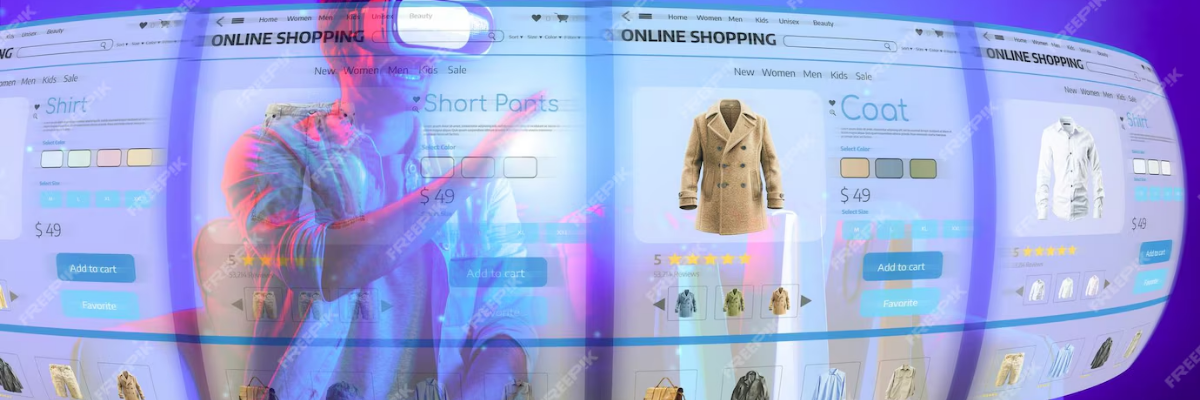
Artificial intelligence (AI in retail) quickly changes the industry in 2025, creating new opportunities for companies and how they can buy consumers. AI runs efficiently, improves customer experiences, and automatically to larger processes, making the retail environment more intelligent, practical, and personal than ever.
Table of Contents
| AI Technology | How It Helps Retailers | Customer Benefit |
|---|---|---|
| AI Chatbots | Provides instant customer support | Faster responses and better assistance |
| Personalized Recommendations | Suggests products based on user behavior | More relevant shopping experience |
| Smart Inventory Management | Tracks stock and predicts demand | Better product availability |
| AI-Powered Payments | Detects fraud and speeds up checkout | Secure and quick transactions |
| Virtual Try-On Technology | Allows customers to test products digitally | Improved buying confidence |
| Predictive Analytics | Analyzes shopping trends and customer data | Better offers and personalized deals |
| Automated Checkout Systems | Reduces manual billing processes | Faster and contactless shopping |
| Voice Commerce | Enables shopping through voice assistants | Convenient hands-free shopping |
AI in Retail: Revolution in the Automation Industry
In retail, AI has introduced innovative automation equipment that improves operational efficiency. Automatic cash systems operated by AI allow customers to buy without cashier. In addition, AI Robot Inventory, Restock shelves are distributed to manage and optimize supply chains, all of which reduce human labor and operating costs.
Inventory Management and Stock predictions
The role of AI is important in inventory management, as it helps retail providers to predict the demand for products more accurately. By analyzing customer behavior and market trends, AI can guess which products will sell and when to reduce waste and improve the availability of the stock.
Personal shopping with AI in retail
AI makes shopping experiences more individual by analyzing customer data and offering analog recommendations. Store providers use AI to guess what customers are likely to buy based on their bricks, previous purchases, and preferences, leading to more relevant product suggestions and dynamic prices.
Customer commitment and chatbots
AI-I-operated Chatbott customers increase the customer’s involvement by providing rapid reactions for investigation and helping in the buying process. These Chatbott 24/7 are available and can help you answer questions, recommend products and even provide personal promotion based on the store owner’s profile.
Adaptation of the supply chain with AI in retail
Ai Supply Chain Management in retail is also optimization. AI operated by AI allows the future analysis of analyzes retail streamlining logistics, ensuring timely delivery and maintaining effective storage levels in many places. By predicting demand, AI helps to reduce waste and cut unnecessary goods costs.
Smart delivery and logistics
AI also plays an important role in improving delivery time. Autonomous vehicles and drones driven by AI are now used to transport goods directly to customers, to speed up delivery and reduce the cost of retailers.
AI in retail: Increase customer experience
The customer experience is fundamentally increased by AI. With features such as virtual shopping assistant, sequential recommendations and personal prices, shopping has never been so interactive and user -friendly. AI streamlines the entire customer ice from surfing to shopping, making it smooth and faster.
Future analysis for better shopping experiences
The AI’s future abilities allow retailers to offer hyperpersonal experiences, giving customers products that are more likely to buy based on previous interactions. This helps retail providers create better-targeted marketing campaigns and product campaigns.
Future trends in AI in retail
Furthermore, the future of AI in retail looks even more exciting, where new techniques become a big part of the shopping experience as a decorated reality (AR) and voice-selected assistant.
Improved reality (AR) integration
AR changes customers’ store methods. AI-enhanced AR allows customers to strive for clothes to imagine products in their homes or increase the decision-making process. As AR develops, AI will play a major role in offering individual virtual experiences and doing online shopping as a visit to the store.
Voice Active AI shopping
AI-operated voice-activated shopping assistants are expected to be more popular, so customers can find products by buying or just talking. This trend is inspired by the increasing use of voting units, which causes hand-free purchases.
Frequently Asked Questions (FAQ)
1. How is AI changing the retail industry in 2025?
AI is helping retailers improve customer experiences through smart recommendations, automated support, and faster shopping processes both online and in stores.
2. What are the benefits of AI in retail shopping?
AI offers personalized product suggestions, quick customer service, better inventory management, and secure payment experiences for shoppers.
3. Can AI improve customer satisfaction in retail?
Yes, AI helps businesses understand customer preferences and provide tailored shopping experiences that increase satisfaction and loyalty.
4. How do retailers use AI for inventory management?
Retailers use AI tools to track stock levels, predict demand, and reduce product shortages or overstock situations efficiently.
5. Is AI in retail safe for customer data?
Most modern retail platforms use advanced AI security systems to protect customer information and maintain safe digital transactions.